Loading...
Serving Hacienda Heights, CA and surrounding areas. (626) 778-2276
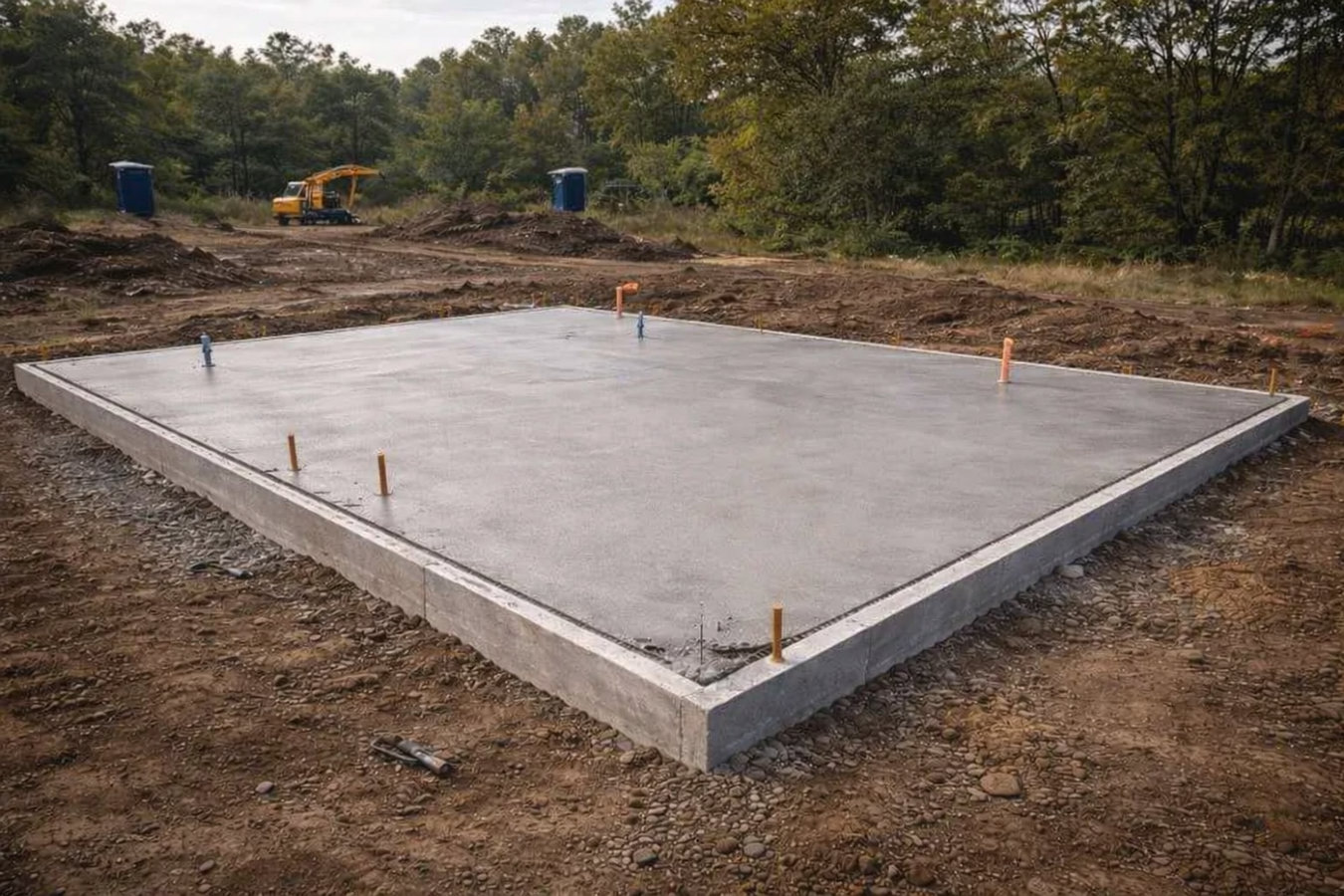
Adding a garage, ADU, or room addition? We pour slab foundations engineered for the clay soils, hillside lots, and seismic requirements common in Hacienda Heights.
Adding a garage, ADU, or room addition? We pour slab foundations engineered for the clay soils, hillside lots, and seismic requirements common in Hacienda Heights.
Slab foundation building in Hacienda Heights involves grading and compacting the site, pulling a Los Angeles County permit, laying a gravel drainage base and moisture barrier, setting steel reinforcement, and pouring the concrete in a single continuous pour - most residential slabs take two to four days of on-site work, then cure for 28 days before heavy loads are placed on them.
If you are planning to add a garage, an accessory dwelling unit, or a room addition to your Hacienda Heights property, the slab foundation is what the whole structure rests on. Getting it right from the start - with proper soil preparation, correct steel placement, and a permit that documents the work - protects your investment for the life of the building. The clay soils and hillside terrain common in this area mean that base preparation requires more attention here than in many other communities.
Many homeowners building on a new slab also need concrete footings for walls or posts around the structure, or a full foundation installation if the project involves a larger structure with raised perimeter walls. We can scope all of it in a single estimate visit.
Cracks running along tile grout lines, through drywall, or across a concrete floor can mean the slab underneath is shifting or settling. In Hacienda Heights, the clay-heavy soils in many neighborhoods expand and contract with seasonal moisture changes, which puts stress on concrete over time. A crack that is growing wider or longer over several months is a stronger signal than one that has stayed the same for years.
When a slab shifts, door frames and window frames shift with it, causing doors to drag along the floor or windows to jam in their tracks. This is one of the most common early warning signs that a foundation is moving, and it often appears before any visible cracking. If multiple doors or windows in different parts of your home start sticking around the same time, that pattern is worth having a contractor look at.
If you are adding a garage, an ADU, a room addition, or any permanent structure to your Hacienda Heights property, you will need a new slab foundation for that structure. Los Angeles County requires a permit and inspections for this work. This is not a warning sign - it is the starting point for any new construction project, and the process begins with a licensed concrete contractor who can help you understand what is involved.
If certain spots on your floor feel soft, springy, or noticeably lower than the surrounding area, the slab may have developed voids where the soil has washed away or settled underneath. Many homes in Hacienda Heights were built in the 1950s through 1970s, and foundations from that era were built to older standards. An uneven floor in a home of that age is worth a professional evaluation.
We pour concrete slab foundations for new garages, detached ADUs, room additions, workshops, and other residential structures throughout Hacienda Heights and the surrounding communities. Every project includes a free on-site estimate, the full LA County permit process, site grading and compaction, moisture barrier installation, steel reinforcement, and the pour and finish. If your project also requires concrete footings for perimeter walls or posts, we can handle those at the same time. For projects involving a more complex structure - such as a full raised perimeter foundation installation rather than a simple slab - we will walk you through the distinction during the estimate visit.
We work on both flat lots and sloped hillside lots throughout Hacienda Heights. Sloped lots require additional grading and sometimes retaining walls before a level slab pad can be created, and we include those elements in our estimates so you see the full picture before committing to the project. We do not provide one price for the slab and then surface the grading cost later.
Best for homeowners adding an attached or detached garage to an existing property.
Suited for homeowners building a granny flat or accessory dwelling unit under current LA County ADU guidelines.
Right choice for extending the footprint of an existing home with a new living space, bedroom, or family room.
For hillside properties that need grading and pad preparation before the slab can be poured level.
Hacienda Heights was built out primarily in the 1950s through 1970s, and the ongoing ADU boom in California has led many homeowners here to add detached structures to properties that never had secondary buildings before. That demand runs into two consistent local challenges: the expansive clay soils throughout the Puente Hills area, which require more base preparation than flat-lot projects in neighboring communities, and the proximity to the Puente Hills fault system, which means seismic reinforcement requirements are built into every permit the county reviews. A contractor who has done foundation work specifically in Hacienda Heights understands both factors and builds them into the estimate from the start.
We work throughout Hacienda Heights and also serve nearby Diamond Bar and Pomona, where similar soil and seismic conditions apply. For homeowners who want to understand the county permit requirements before calling a contractor, the Los Angeles County Department of Public Works is the official starting point, and the California Geological Survey publishes seismic hazard zone maps that show the specific designations for this area.
We respond within one business day. We ask about your project, your address, and whether you have started the permit process - we visit the site before giving a firm price, since lot slope and soil conditions affect cost significantly.
We assess your lot, check the slope and soil, and walk through your project scope. You receive a written, itemized estimate covering grading, base prep, steel reinforcement, the pour, and LA County permit fees - before anything is scheduled.
We submit the permit application to the Los Angeles County Department of Public Works on your behalf. Plan check review typically takes several weeks - we build this into the project timeline so you are not surprised by the wait.
We grade and compact the site, install the moisture barrier and steel, and pour the slab - typically over two to four days. A county inspector visits before the pour and at final completion. The slab needs 28 days to reach full strength.
We visit the site, assess the soil and slope, and give you a written, itemized estimate - no phone quotes, no pressure to commit on the spot.
(626) 778-2276The Puente Hills area sits on expansive clay soils that swell with winter rain and shrink in summer heat. We assess your specific lot before recommending a slab design, and we compact and grade the base to account for that movement. This is what separates a slab that holds up for 50 years from one that starts cracking in the first few seasons.
Hacienda Heights sits close to the Puente Hills fault system, and Los Angeles County inspectors take seismic reinforcement requirements seriously during permit review. We build the correct steel layout into every foundation pour we do here - it is not an add-on, and we do not skip it to cut the bid price.
Hacienda Heights is unincorporated, so all permits go through Los Angeles County rather than a city office. We have pulled foundation permits through the county many times and know exactly what the plan checker needs. You do not visit any government office - we handle the application, the inspections, and the paperwork.
Every estimate we provide breaks out grading, base preparation, materials, steel, labor, and permit fees separately. The number you agree to is the number on the final invoice. We do not adjust prices after work has started or add line items that were not in the original estimate.
A slab foundation is not a place to cut corners. The permit process, the soil preparation, and the steel placement are what separate a foundation that lasts the life of the building from one that starts showing problems in a few years. That is what we focus on, and it is reflected in every estimate we give.
For concrete construction standards, the American Concrete Institute is the primary reference used by contractors and inspectors alike. To verify a contractor license in California, visit cslb.ca.gov .
For projects requiring a full raised perimeter foundation rather than a slab-on-grade pour.
Learn moreIndividual footings for posts, columns, and walls that tie into the slab or surrounding structure.
Learn moreCall Hacienda Heights Concrete Company today - LA County permit timelines mean the sooner you start the process, the sooner your project gets underway.